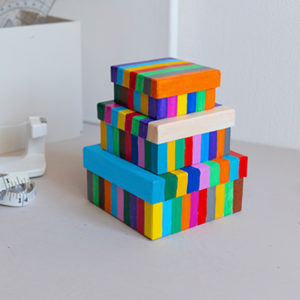
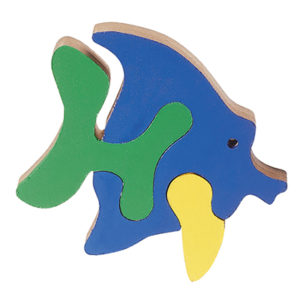
Using Marabu colours the airbrush technique offers a variety of great design possibilities on various substrates: from paper, wood & craft materials to glass & porcelain to textiles & silk.
Beautiful patterns or sharp outlines can be realised using this technique; photographically accurate pictures can be enhanced with special effects such as metallic gloss or mirror reflexes.
The colour is mixed with the airflow in the spray pistol and is applied in extremely thin layers by constantly moving your hand. By varying the aperture of the nozzle, the distance to the painting substrate or by the use of stencils, there is no limit to your artistic scope.
General Advice:
Please follow the instructions for airbrush technique depending on paint type.
Further advice:
- Stir well before use or, if necessary, strain the colours.
- Choose the appropriate thinner for colour and substrate.
- The colour should be sufficiently liquid that it can pass through a teastrainer.
- The substrate should be dust and grease-free.
- Use self-adhesive templates.
- Ensure that the workplace is well ventilated and that spray mist is avoided.
- When changing colours, use the appropriate cleaning agent for the spray pistol - in the case of water-based Marabu-colours the appropriate cleaning agent is simply water.
- After use carefully clean all equipment with the appropriate cleaning materials.
- Always carry out pre-trials.
Separate instructions for airbrush technique depending on paint type:
Airbrushing with Marabu Decorlack Acryl
Nozzle size: from 0.2 mm
Pressure: from 2 bar
Thinning: 4 parts colour to 1 part water
Cleaning: with water
The specifications shown for nozzle sizes, dilution and pressures are guidelines only and should be adjusted accordingly.Serviette Technique
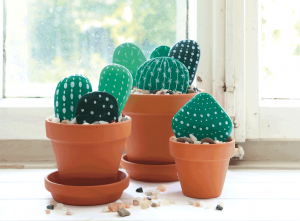
Cut out your required motif. Prime an earthenware pot with Marabu Decormatt and Marabu Serviette varnish & glue, put this motif onto the pot, then re-apply the paint - your masterpiece is now finished! We will show you how easy it is to use this découpage technique.
In addition to this, Marabu offers three special, water-based media so that new, fascinating ideas can be converted into reality:
crackle medium for the crackling technique, textile medium for fabrics and porcelain medium for decorative objects made of porcelain, ceramic and glass. Further instructions can be found on the product page for Marabu Serviette varnish & glue.
You need:
Serviettes of your choice, Marabu Decormatt Acryl or Decorlack Acryl, Marabu Serviette varnish & glue, matt or gloss, a soft bristle brush, a cup filled with water, a pair of scissors, any objects made of wood, papier-mâché, polystyrene, terracotta, glass, plastics, modelling pastes, stone etc.
This is how it's done:
1. Prime the object you would like to decorate with a Marabu Decormatt Acryl or Decorlack Acryl colour shade that matches the serviette motif.
2. When you have cut out the serviette motif, remove the first, printed coat carefully and put it on the object you are decorating. Always ensure the primer is totally dry first.
3. Now cover the whole motif together with the background with Marabu Serviette varnish & glue. Always paint from the middle of the motif to the rim. Allow to dry - finished!Crackling using the serviette technique
Beautiful crackles can be achieved using Marabu crackle medium, clear.
Instructions:
1. Prime with Marabu Decormatt or Decorlack; dry with a hair dryer.
2. Apply the medium evenly; dry with a hair dryer.
3. Apply Decormatt or Decorlack very quickly; the crackle effect will occur immediately. Allow to dry for at least 1 hour.
4. Continue with the serviette technique.
Hints & Tips:
- The thicker the uppermost layer, the more distinctive the crackles will be; for fine crackles the paint has to be applied in thin layers.
- The character of the crackle effect can be influenced by the direction the uppermost layer of the paint is spread: straight spreading in one direction results in vertical or horizontal crackles; a cloud-like effect is achieved by circular paint applications. Simply experiment!
- If the crackles appear too large, the crackle medium and the corresponding paint colour can be re-applied. The crackles should be much finer.
- Crackle effect can be obtained without a primer: simply start with the crackle medium...
- Only apply the uppermost layer of paint once - painting over this while it is still wet will destroy the crackle effect. Glazed painting technique
Glazes are colour layers which make the substrate transparent - a very interesting thing, e.g. for wood to accentuate the nature of the grain. Besides a covering paint application, glazed painting is even possible using Decormatt Acryl. For this, Decormatt Acryl is thinned with some water. A final application with colourless Marabu varnishes will protect your designs.Transparent painting/glazed painting technique
Glazes are colour layers which make the substrate transparent - a very interesting thing, e.g. for wood to accentuate the nature of the grain. But even structured papers (e.g. Japanese paper) and the like can be effectively "dyed". No limits are set to your taste and imagination! Besides a covering paint application, glazed painting is even possible using Decormatt and Decorlack Acryl. For this, the Decormatt/Decorlack Acryl paint is thinned with some water. A final application with colourless Marabu varnishes will protect your designs.
...and another varnish!
Of course you can also choose to apply a matt or satin-finish to your Decorlack Acryl design. Just apply one of the clear aqua Varnishes to the dried paint.Airbrush instructions for Decorlack Acryl
For airbrushing dilute Decorlack Acryl with water (4 parts paint to 1 part water). With a 0.2 mm nozzle and 2 bar pressure, Decorlack Acryl can easily be sprayed with an airbrush gun. Clean all tools with soap and water immediately after use.Exception
Decorlack Acryl is not suitable for Fimo.Decorative clay pot figures
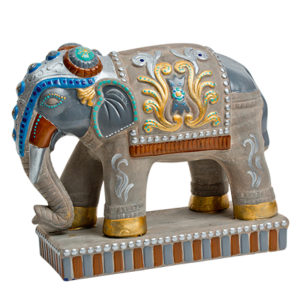
The Marabu range provides the ideal partners for painting, embellishing and varnishing your clay pot figures: Decormatt Acryl, Decorlack Acryl and the Glitter and Pluster Pen. Serviette technique is also highly suitable for creating stunning designs on clay pots!Selecting a brush
Elastic synthetic or natural brushes or paint rollers produce beautifully even surfaces. Delicate embellishments with Decorlack Acryl are best applied with a fine, elastic round brush.Thorough cleaning after use
The colours of the acrylic paints Decormatt and Decorlack are very intensive. Brushes should therefore be cleaned with plenty of water and soap directly after use.Combining acrylic paints and special effects liners Glitter and Pluster Pen
Objects painted with Decorlack Acryl and Decormatt Acryl can be subsequently embellished with the Glitter and Pluster Pen.Get ready to combine!
The Marabu acrylic accessories programme is ideal for combining with all Marabu paints such as Basic Acryl, Acryl Color, Decormatt and Decorlack! Whether painted over, mixed or accented: The Structure Paste and gels and the Modelling Pastes are waiting to be used in your unique and effective designs!Marble effects with Decorlack Acryl
Expressive marble effects with Decorlack Acryl can by achieved by placing drops of two colours together and pulling a pin through the wet paint to create the desired pattern.Useful information about surface treatment
To obtain particularly smooth surfaces, we recommend applying a diluted base coat of Decoupage Varnish to the untreated wood and smoothing it with fine sand paper after drying. Then apply Decormatt Acryl or Decorlack Acryl to the dust-free surface as a primer. Highly absorbent materials and biscuit ware (unglazed porcelain/ceramics) become particularly smooth if the surface is thoroughly cleaned and then sealed with a layer of diluted Decoupage Varnish before applying any designs.Top paint layer
All colours from the Decormatt Acryl and Decorlack Acryl range can be used as the top layer for "crackling", except metallic and mother-of-pearl colours.Optimum weather resistance...
...of Decormatt Acryl and Decorlack Acryl can be achieved on materials that are clean and free from dust and grease.Primary colours for colour theory
For mixing according to colour theory, the acrylic paints Decormatt, Decorlack, Basic Acryl and Acryl Color are available in the basic colours (primary colours) Cyan, Magenta and Yellow. They can be used to mix the compound colours (secondary colours) Orange, Violet and Green. Simply mix two primary colours together.Stencilling made easy.
Marabu acrylic paints are ideal for stencilling. Use a little bit of paint on a stippling brush, a sponge or a paint roller to achieve the most beautiful designs!How about mixing?
All Decorlack Acryl colours – including metallic and mother-of-pearl – can be mixed together.
Painting leather with Decorlack Acryl
Can I use Marabu Decorlack Acryl to paint leather?
Of course – Decorlack Acryl is ideal for painting degreased leather.Soiled clothing
How can I remove the paint from textiles?
Soiled areas should immediately (very important!) be washed out by hand using lukewarm water and soft soap. Stubborn stains can be soaked in a floor cleaner solution (e.g. Cif) and then rinsed. Dried stains can possibly not be removed without residue.Saliva-resistant acrylic paints
Are the paints saliva-resistant?
The Marabu acrylic paints Decorlack Acryl, Decormatt Acryl, Basic Acryl and Acryl Color are saliva-resistant and therefore safe for children.